
When most drivers think about the parts that keep their car moving, their minds immediately go to the high-profile components under the hood. We talk a lot about engines, transmissions, and spark plugs, but there is an unsung hero underneath your vehicle that actually does the physical labor of moving you forward. We are talking about your axles.
Think of your axles as the bridge between your car's power center and the pavement. You can have a thousand-horsepower engine, but without a healthy axle to deliver that rotational force to your wheels, you are just sitting in a very loud, very expensive stationary box. Because axles are tucked away beneath the chassis, they are easy to forget about until they start making strange noises or cause your steering wheel to shake. At our shop, we want to help you understand how these critical parts work, how to spot the early warning signs of trouble, and what goes into a professional axle repair.
The Two Types of Axles on the Road Today
Depending on whether you drive a compact commuter car, a sleek crossover, or a heavy-duty pickup truck, your vehicle will use one of two main axle configurations.
CV Axles (Constant Velocity): If you drive a front-wheel-drive car or a modern all-wheel-drive crossover, your vehicle relies on CV axles. These are slender shafts that feature specialized flexible joints on each end. These joints are absolute engineering marvels because they allow the axle to transfer continuous power to the wheels even while your suspension is bouncing up and down and your wheels are turning left and right.
Solid Axles (Straight Axles): This is the traditional, heavy-duty design you will find on the rear of most pickup trucks, large SUVs, and serious off-road vehicles. A solid axle is a massive, rigid steel housing that connects the driver and passenger sides together. Tucked safely inside this housing are the differential gears and the axle shafts. It is built to carry immense weight and withstand brutal towing conditions, but it doesn't offer the smooth, independent ride quality of a CV system.
How to Spot a Failing Axle Before It Breaks
Axles are incredibly tough, but they are subject to constant rotational stress and road debris. Fortunately, they rarely fail without giving you plenty of advance notice. If you pay close attention to how your car handles and sounds, you can catch an axle issue before it leaves you stranded on the shoulder of the highway.
The most famous warning sign of a failing CV axle is a sharp, rhythmic clicking or popping noise that occurs whenever you make a tight turn at low speeds, such as navigating a parking lot or making a U-turn. This sound happens because the protective rubber boot surrounding the CV joint has torn open. Once that boot splits, the essential lubricating grease escapes, and road grit, water, and salt get inside the joint. The precision steel bearings quickly begin to wear down and bind, creating that distinct clicking pattern.
Another major red flag is a severe vibration or shudder that you feel through the floorboards or the steering wheel, especially when you step on the gas pedal to accelerate. When an axle shaft becomes slightly bent from a deep pothole or if the internal joints develop excessive play, the axle loses its perfect balance. As it spins thousands of times per minute, that tiny wobble translates into a rhythmic shake that gets worse the faster you go.
Finally, keep an eye out for a greasy mess on the inside of your wheels or tires. If you look behind your front tire and see a dark, thick grease splattered all over your brake components and suspension arms, your CV boot has recently failed. Catching a torn boot early is critical. If you bring the car to us right after the boot rips, we can often just clean the joint, repack it with fresh grease, and install a new rubber boot. If you wait until it starts clicking, the metal is already damaged, and the entire axle assembly will need to be replaced.
Let Madison Automotive Keep Your Drivetrain Perfectly Balanced
Driving on a severely worn axle is a major gamble. If a CV joint or an axle shaft snaps completely while you are driving, your vehicle will instantly lose all power to the wheels, and you will have to coast to a stop. In a worst-case scenario, a broken axle can flail around under your car, destroying your brakes, tearing up your suspension, and causing a complete loss of steering control.
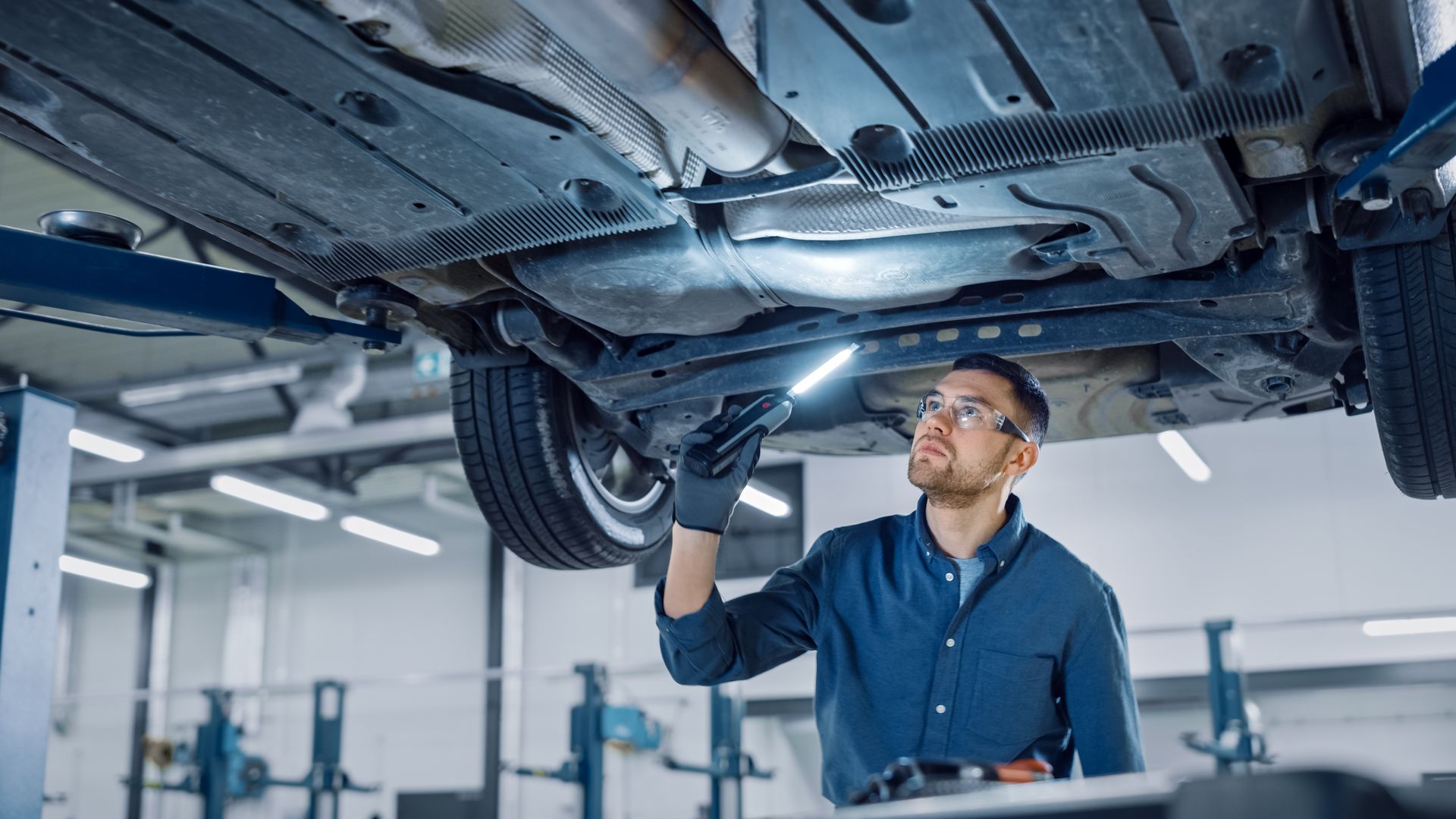
Bring your vehicle to Madison Automotive in Memphis, TN, this week and let our friendly team perform a thorough under-car inspection.
Give us a call or pull right into our service bay today to schedule an appointment.